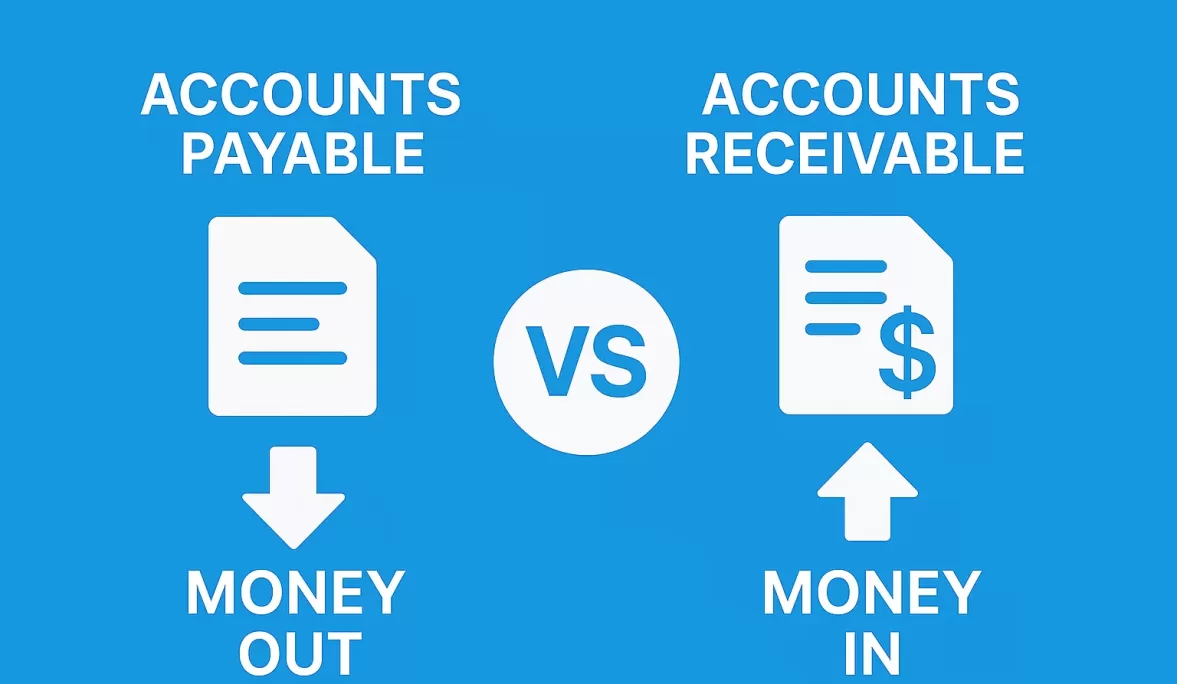
Managing money coming into and going out of a business is at the heart of smooth financial operations. Two important accounting terms that often cause confusion are accounts payable (AP) and accounts receivable (AR). While they sound similar, they represent opposite sides of a company’s cash flow. Understanding accounts payable vs receivable is essential for effective cash flow management, vendor relationships, and healthy business operations.
Accounts Payable vs Receivable: What’s the Difference?
What is Accounts Payable?
Accounts Payable meaning: Accounts payable (AP) refers to the short-term obligations a business owes to its suppliers or vendors for goods and services purchased on credit. It represents the amount owed to a supplier for goods like raw materials or office supplies. Examples include receiving an invoice from a supplier and scheduling the payment process within the due date. Managing AP well can also help businesses take advantage of early payment discounts and build strong vendor relationships.
What is Accounts Receivable?
Accounts Receivable meaning: Accounts receivable (AR) refers to the money owed to a company by its customers for delivering a product or service on credit. It represents the amounts businesses need to collect payment for after issuing an invoice. Good receivable management ensures steady cash inflow and reduces the chances of delayed payments.
In simple words, account payable and accounts receivable track opposite flows of money: AP is money going out, while AR is money coming in.
Difference between Accounts Payable and Accounts Receivable
The Accounts Payable Process
The accounts payable process includes receiving an invoice, verifying the invoice details, approving it, and then scheduling the payment. Managing AP effectively reduces errors in invoice processing, prevents late fees, and ensures smooth vendor relationships. Many companies use accounting software to automate invoice processing and keep track of their short-term obligations.
The Accounts Receivable Process
On the other hand, the accounts receivable process starts when a business delivers a product or service to a customer on credit. It involves sending an invoice, monitoring outstanding dues, following up with clients, and ensuring the company can collect payment on time. Strong AR management prevents cash flow bottlenecks and keeps business operations running smoothly.
Accounts Payable vs Receivable: Quick Comparison
Below is a quick comparison of accounts payable vs accounts receivable. This table highlights the core difference between accounts payable and accounts receivable in a business’s financial system.
| Feature | Accounts Payable (AP) | Accounts Receivable (AR) |
|---|---|---|
| Definition | Money a company owes to suppliers/vendors (short term obligations). | Money owed to a company by customers after selling product or service. |
| Role in Cash Flow | Outflow of cash. | Inflow of cash. |
| Recorded As | Liability on the balance sheet. | Asset on the balance sheet. |
| Example | Invoice received for office supplies or raw materials. | Invoice sent to a customer for goods sold on credit. |
| Process | Receiving an invoice, invoice processing, approving, and completing the payment. | Issuing invoice, tracking dues, and collecting payments. |
| Benefit of Good Management | Strengthens supplier for goods relationship, avails early payment discounts. | Improves liquidity and ensures timely revenue collection. |
Bills Receivable and Bills Payable
- Bills Receivable: These are written promises from customers to pay a certain amount owed to a company at a future date. They are considered assets.
- Bills Payable: These are promises made by a company to pay its creditors or suppliers in the future. They are considered liabilities.
Together, bills receivable and bills payable form a part of payable and receivable accounting, reinforcing the difference between accounts payable and accounts receivable.
How Accounts Payable and Receivable Work Together
Accounts payable (AP) and accounts receivable (AR) are two sides of the same financial transaction. AP and AR always work in tandem to complete the cycle of buying and selling on credit.
Here’s a simple example of how accounts payable and receivable work:
Step 1: The Sale
Suppose Company A sells product to Company B with 30-day payment terms.
- Company A records the transaction as a sale and adds the amount to its accounts receivable (asset) because payment is still pending.
- Company B records the transaction as a purchase and adds the same amount to its accounts payable (liability) because it owes money to Company A.
Step 2: The Payment
- When Company B pays the invoice:
- Company A reduces its accounts receivable and records an increase in cash.
- Company B reduces its accounts payable and records a decrease in cash.
In brief:
- For Company A (the seller): Accounts Receivable represents money owed by customers, making it a current asset.
- For Company B (the buyer): Accounts Payable represents money owed to suppliers, making it a current liability.
Together, they form the full picture of a credit transaction, showing how money flows between businesses.
In every case, one company acts as the creditor (seller granting credit) and the other as the debtor (buyer owing money). This dual role underlines the fact that accounts payable and accounts receivable are inseparable, they always coexist in credit-based business operations.
Why Understanding AP and AR is important
Understanding accounts receivable and accounts payable helps keep the business engine running smoothly. Both AP and AR work together to balance money coming in and going out, ensuring stability and growth.
- Maintaining healthy cash flow management: Accounts receivable ensures that money owed to a company is collected on time, while accounts payable ensures that a business meets its short-term obligations without delays. Together, they keep cash flow steady.
- Balancing obligations and income: If receivables are collected quickly but payables are poorly managed, businesses risk straining vendor relationships. On the other hand, if payables are delayed without steady receivables, the business may run into liquidity issues. Coordinating both helps avoid these bottlenecks.
- Strengthening relationships: Paying suppliers on time builds trust and opens opportunities for early payment discounts, while collecting receivables efficiently helps maintain strong customer relationships.
- Optimizing working capital: Accounts payable provides flexibility in managing outflows, while accounts receivable accelerates inflows. The right balance ensures enough liquidity to cover expenses, invest in growth, and plan for long term needs.
- Supporting financial planning: Together, AP and AR provide a real-time picture of what a business owes and what it is owed. This visibility helps management make smarter decisions about budgeting, investments, and scaling operations.
Whether it’s paying suppliers or collecting from customers, businesses that integrate AP and AR processes with accounting software gain efficiency, transparency, and accuracy, making both sides of the cash flow cycle work seamlessly together.
Conclusion: Accounts Receivable vs Payable
Accounts payable vs receivable may look like two sides of the same coin, but they serve opposite purposes in business. Accounts payable is about managing money owed to vendors, while accounts receivable is about collecting money owed to a company.
Understanding both ensures that businesses can keep their financial health in check, improve vendor and customer trust, and keep their cash flow strong.
Also Read: Top 15 Best Accounts Payable Software
FAQs
1. What is the difference between account payable and accounts receivable?
The difference between accounts payable and accounts receivable lies in who owes whom.
- Accounts Payable (AP): This is the money a business owes to its suppliers, vendors, or service providers for goods and services purchased on credit. It is recorded as a liability on the balance sheet because it represents short-term obligations the business must settle. For example, if a company purchases office supplies on credit, the unpaid amount is part of accounts payable.
- Accounts Receivable (AR): This is the money that customers owe to a business after purchasing a product or service on credit. It is recorded as an asset on the balance sheet because it represents incoming cash owed to the business. For example, if a company delivers goods to a client and issues a 30-day invoice, that amount is part of accounts receivable.
In short, AP tracks money going out, while AR tracks money coming in. Both are critical for managing cash flow and ensuring smooth business operations.
2. What is the AP and AR process?
The AP and AR processes are complementary but focus on opposite cash flow directions:
- AP Process: This begins when a business receives an invoice from a supplier. The steps include verifying the invoice details, matching it with purchase orders, getting approval, and finally completing the payment within the agreed terms. Effective AP management not only prevents late payment penalties but also helps businesses take advantage of early payment discounts and maintain strong vendor relationships.
- AR Process: This starts when a business delivers a product or service on credit and issues an invoice to the customer. The steps involve sending the invoice, recording the receivable, monitoring due dates, following up with customers, and collecting payment. A well-managed AR process improves liquidity, reduces the risk of bad debts, and ensures the company has steady incoming cash.
Together, the AP and AR processes reflect how businesses manage both outgoing and incoming funds, forming the backbone of cash flow management.
3. Do you send invoices to AP or AR?
This depends on which side of the transaction you are on:
- If you are a supplier or vendor, you send invoices to your customer’s accounts payable (AP) department because they are responsible for processing and settling payments.
- If you are a business selling products or services, you issue invoices through your accounts receivable (AR) process to request payment from your customers.
In essence, the invoice a supplier sends to AP becomes the receivable for the supplier’s AR. This reflects the symmetry in financial transactions—every payable is someone else’s receivable.
4. What is the difference between accounts payable and billable?
Although the terms sound similar, they refer to very different aspects of accounting:
- Accounts Payable: Refers to amounts a business owes to suppliers or service providers. These are obligations the company must settle, usually within a short period, making them liabilities.
- Billable: Refers to charges that a business can bill to its clients or customers for products or services provided. For example, a consulting firm may track billable hours that will later be invoiced to the client. Billable items eventually become part of accounts receivable once the invoice is issued.
So, while accounts payable deals with outgoing payments the business must make, billable refers to potential income that can be invoiced and collected from customers.