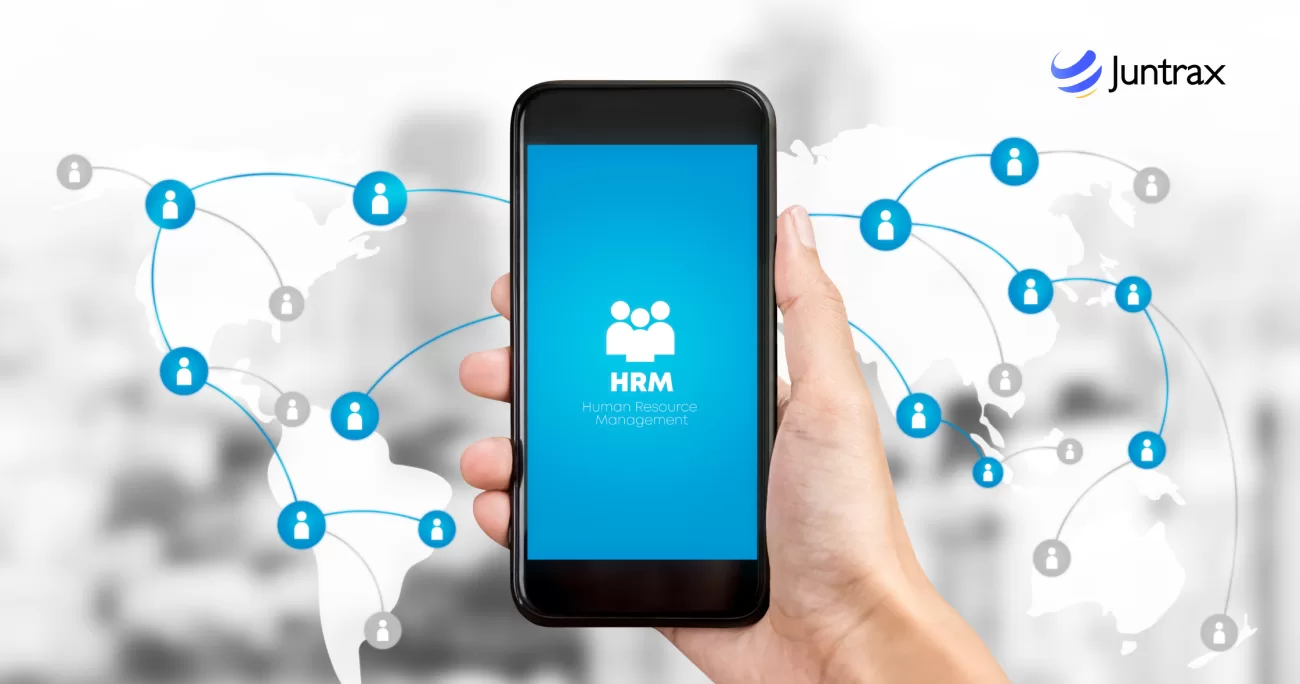
Every missed timesheet, delayed payroll, or lost employee record costs your company time, money, and trust—issues HR teams face daily in manual or fragmented systems. This is why modern organizations are turning to a Human Resource Management System (HRMS)—a centralized solution that automates routine tasks, ensures accurate HR data, and allows your HR team to focus on strategic initiatives like workforce planning, training, and employee satisfaction.
In this guide, we’ll delve into what HRMS is, its key features, benefits, and how it revolutionizes the way HR teams operate.
What Is HRMS?
HRMS stands for Human Resource Management System, a suite of software applications designed to automate and manage core HR functions. These functions include employee data management, payroll processing, recruitment, performance management, and compliance tracking. By centralizing these processes, HRMS enables HR professionals to focus on strategic initiatives rather than administrative tasks.
HRMS Full Form
As mentioned, HRMS stands for Human Resource Management System. It’s sometimes referred to as Human Capital Management (HCM) software, though HCM typically encompasses a broader scope, including strategic aspects like talent management and succession planning.
What Is an HRMS Portal?
An HRMS portal is a web-based platform that serves as the central hub for all HR-related activities. Employees and HR professionals can access the portal to perform tasks such as:
- Leave Applications: Submit and approve time-off requests.
- Payroll Information: View payslips and tax documents.
- Training and Development: Enroll in courses and track progress.
- Performance Reviews: Participate in evaluations and feedback sessions.
This centralized access enhances transparency and empowers employees to manage their HR needs independently.
Key Features of HRMS
Modern HRMS platforms come equipped with a variety of features that cater to the diverse needs of HR departments:
| Feature | Description |
|---|---|
| Employee Data Management | Centralized storage of employee records, including personal and professional details. |
| Payroll Management | Automated calculation of salaries, deductions, and generation of payslips. |
| Recruitment & Onboarding | Streamlined hiring process from job posting to employee induction. |
| Performance Management | Tools for setting goals, conducting reviews, and providing feedback. |
| Leave & Attendance | Tracking of employee attendance, leave balances, and approvals. |
| Training & Development | Management of employee learning paths and skill development programs. |
| Compliance Tracking | Monitoring adherence to labor laws and organizational policies. |
| Analytics & Reporting | Generation of reports and insights to inform HR decisions. |
Benefits
Adopting an HRMS brings numerous advantages to organizations:
- Increased Efficiency: Automation of routine tasks reduces manual effort and minimizes errors.
- Cost Savings: Streamlined processes lead to reduced administrative costs.
- Improved Compliance: Automated tracking ensures adherence to labor laws and internal policies.
- Enhanced Employee Experience: Self-service portals empower employees to manage their HR needs.
- Data-Driven Decisions: Analytics provide insights for informed HR strategies.
HRMS in Payroll Management
Payroll is a critical function within HR, and HRMS plays a pivotal role in its management:
- Automation: Calculates salaries, taxes, and deductions automatically.
- Accuracy: Reduces errors associated with manual calculations.
- Timeliness: Ensures employees are paid on time, every time.
- Compliance: Adheres to tax regulations and statutory requirements.
For instance, platforms like Juntrax offer payroll solutions that cater to diverse organizational needs.
Global HRMS Solutions
Organizations with a global workforce require HRMS solutions that can handle diverse regulations and cultural nuances:
- Juntrax: Offers a unified platform for managing global HR needs, including payroll, reports, and compliance.
- Workday: Provides comprehensive HR solutions with a focus on analytics and talent management.
- SAP SuccessFactors: Delivers cloud-based HR software with modules for core HR, performance, and learning.
These platforms enable organizations to manage their global workforce efficiently and compliantly.
Choosing the Right HR Software Solution
When selecting an Human Resource Management software, consider the following factors:
- Scalability: Can the system grow with your organization?
- Customization: Does it cater to your specific HR needs?
- User Experience: Is the interface intuitive for both HR professionals and employees?
- Integration: Can it integrate with other business systems like ERP or CRM?
- Support: Is there reliable customer support available?
Evaluating these aspects ensures that the chosen HRMS aligns with your organizational goals and enhances HR operations.
Also Read: How HR Management System can benefit SMEs and Startups?
Conclusion
Implementing an HRMS is a strategic move towards modernizing HR functions. It not only automates and streamlines processes but also provides valuable insights that drive informed decision-making. Whether you’re a small enterprise or a large corporation, adopting an HRMS can lead to improved efficiency, compliance, and employee satisfaction.
FAQs
1. What is the difference between HRMS and HRIS?
HRIS (Human Resource Information System) focuses primarily on managing employee data, while HRMS encompasses a broader range of HR functions, including payroll, performance management, and compliance tracking.
2. Can HRMS be used for small businesses?
Yes, many HRMS solutions offer scalable options suitable for small to medium-sized enterprises, providing essential HR functionalities without the complexity of larger systems.
3. How does HRMS improve employee experience?
By providing self-service portals, mobile access, and transparent processes, HRMS empowers employees to manage their HR needs efficiently, leading to higher satisfaction and engagement.
4. What are the security features of HRMS?
HRMS platforms implement robust security measures, including data encryption, role-based access controls, and regular audits, to protect sensitive employee information.